
Ukraine switched off Russia's Starlinks in February. Who decides who stays connected now?
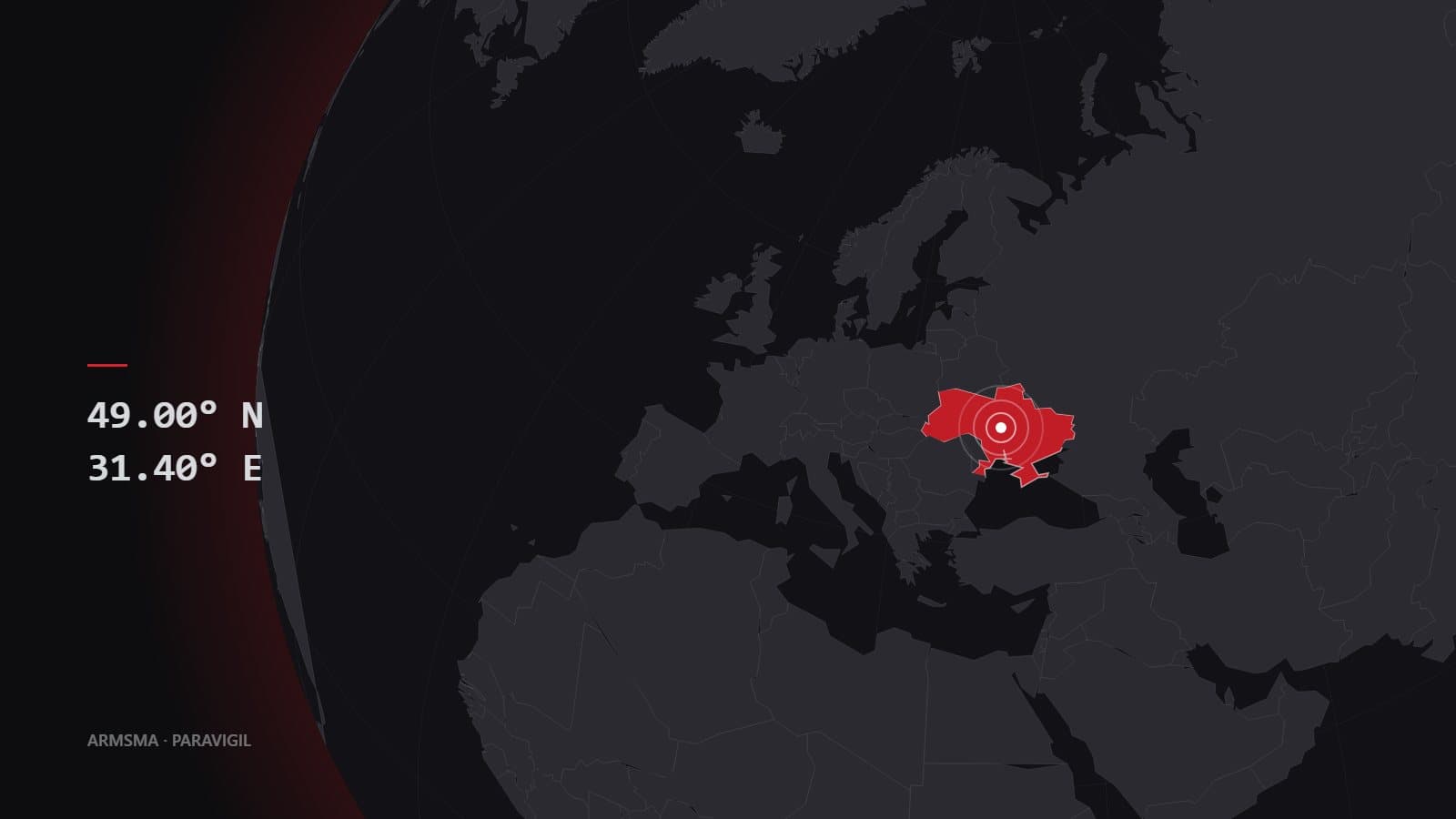
On 5 February 2026, Ukraine's defence minister, Mykhailo Fedorov, posted a single line on Telegram: "Starlinks included in the 'white list' are working — Russian terminals have already been blocked." That is how Reuters reported it. A Russian military blog, "Two Majors", had already reported a major failure of Russian-side terminals starting the evening before.
For four years, the satellite network built by Elon Musk's SpaceX had been Ukraine's lifeline and, according to Kyiv, a tool its enemy had learned to use as well. Within days of a single government decision, Ukrainian officials said, that use had ended.
The episode matters beyond the battlefield. It showed that one private company's software switch can change what a whole army can do, and that the same switch can catch the wrong users. By October 2026, Ukraine itself was complaining that limits on its own satellite links were not its choice.
How did a whitelist cut an army off?
The mechanism was simple. On 1 February Fedorov announced that "unverified terminals will be disconnected", Ukrainska Pravda reported. The next day the Ministry of Defence said the Cabinet of Ministers had adopted a resolution introducing a whitelist: only verified, registered terminals would work in Ukraine, and the ministry would implement it together with SpaceX.
The reason given was drones. Fedorov said Russian drones carrying terminals "fly at low altitude, are resistant to electronic warfare" and are hard to shoot down. Euronews reported that Ukrainian officials had linked attacks to Starlink-equipped drones, and that Ukraine has received more than 50,000 Starlink terminals since 2022.
Registration was split by user. According to the ministry's instructions, civilians make one free visit to an administrative service centre with their ID, businesses and public servants apply through the Diia portal from 3 February, and military units submit terminal details through the DELTA system. Even verified terminals may work "only in stationary mode and at low speeds during movement", the ministry said. The Ministry of Digital Transformation's outlet Digital State added that the whitelist was updated once a day.
The question is what happened when the list went live.
What did each side say it felt?
Ukrainian officials described a collapse. Serhiy Beskrestnov, an adviser to the defence minister, wrote: "All command of the troops has collapsed. Assault operations have been stopped in many areas," according to Reuters. A Ukrainian military source told Reuters that Russian units were trying to switch to Russian-made RS-30M satellite terminals. Reuters stressed it could not verify the scale of the disruption, though three Ukrainian sources said it appeared significant.
Russian voices were mixed. A pro-Kremlin blogger, Boris Rozhin, said there were "no alternatives at all, right now", while another Russian blog said backup radios were still working, CNN reported. On 18 February, Russian Deputy Defence Minister Aleksey Krivoruchko acknowledged that the terminals had been disabled for about two weeks, but said "this has not affected the intensity and effectiveness of unmanned systems", according to Anadolu Agency. Neither side's account has been independently confirmed.
Russia also appears to have tried to get back in. On 10 February, Ukraine's Coordination Headquarters for the Treatment of Prisoners of War said Russian personnel had pressured relatives of Ukrainian prisoners into registering terminals in their own names, and that such terminals had been disabled with SpaceX, Novaya Gazeta Europe reported.
Were Ukrainians cut off too?
Yes, to some degree, but nobody has published how many. CNN reported that some Ukrainian terminals were also cut off and that the extent was unclear while whitelisting continued. One Ukrainian combat officer posted that the shutdown had left part of her unit without communication until it brought in an alternative system; a drone pilot said that after registering, "everything is fine".
Claims circulating online that thousands of Ukrainian service members were locked out come from single outlets, and ARMSMA could not confirm any such figure from an official or independent source. Months later, Musk himself acknowledged that the whitelist also cut off some Ukrainian civilians whose terminals were not on the list, according to the Kyiv Post.
How did Russia get the terminals in the first place?
SpaceX said in February 2024 that it "does not sell or ship Starlink to Russia", Euronews recalled. In an interview with The Economist reported on 25 July 2026, Musk gave his version: "They received terminals ordered through Ukraine, and then smuggled them" onward, according to Kyiv Post and Caliber.Az. He said some were used to carry out attacks. We could not read the Economist's original text, so the quote rests on those two reports.
Musk's account explains why the fix worked the way it did: if terminals were bought as Ukrainian ones, the only reliable test was to check who owned each one. It does not explain how many terminals took that route.
Why is Ukraine now arguing about speed limits?
In mid-October the dispute turned around. Ukrainian officials said Starshield, the military-grade version of Starlink, stopped working when terminals moved at high speed, hampering drones used for attack and air defence, The Moscow Times reported. Beskrestnov said "our armed forces did not receive a warning about these restrictions, and this led to the failure of a number of missions," according to Al Jazeera.
On 14 October Fedorov, by then described as a former defence minister, wrote that connectivity "at speeds of up to 160 km/h is being restored" and that "removing Starshield's speed limit entirely is now critical for Ukraine's defense," Meduza reported. Musk replied: "Starshield systems are owned and controlled by the U.S. government. Any limits on speed or usage are decided by the US military and ultimately POTUS."
A Defence Ministry source said on 15 October that Starshield's work in motion had resumed, The Moscow Times reported, citing Ukrinform. Two days later President Volodymyr Zelenskyy said Ukraine still could not use Starlink or Starshield "to shoot down jet-powered Shaheds", and that service shuts off above 161 km/h in Ukraine but works at more than 180 km/h in the EU, CBS News reported. President Donald Trump said he had not limited Ukraine's access.
On 17 October US Secretary of State Marco Rubio said Ukraine does not currently have access to Starshield, that its request to use it for deep strikes inside Russia was "under conversation", and that the disruption "wasn't deliberate", Al Jazeera reported.
What we do not know
- How many terminals Russia was using, and how many were cut off. Reuters notes this is unclear.
- How many Ukrainian military and civilian users lost service, and for how long. No official total has been published.
- Whether Russia's drone operations were really unaffected, as Moscow says, or badly disrupted, as Kyiv says.
- Who set the October speed limits, and why. Musk, the White House and Kyiv give accounts that do not match, and as of 18 October it was not clear whether the limit was still in place.
What to watch
February showed that a verified list can shut an adversary out of a network it never paid for. October showed the other side of that power: whoever controls the list, and the speed settings, also controls the defender. The next signals to watch are whether Washington grants Ukraine Starshield access, whether the speed limit is lifted, and whether Russia finds a substitute for the satellites it lost. As of 18 October 2026, none of those questions had a public answer.
Related articles
Comments (0)
Sign in to join the discussion.
- No comments yet — be the first.