
Three weeks that redrew north-east Syria — what did the SDF's collapse cost, and who is holding the IS prisoners now?
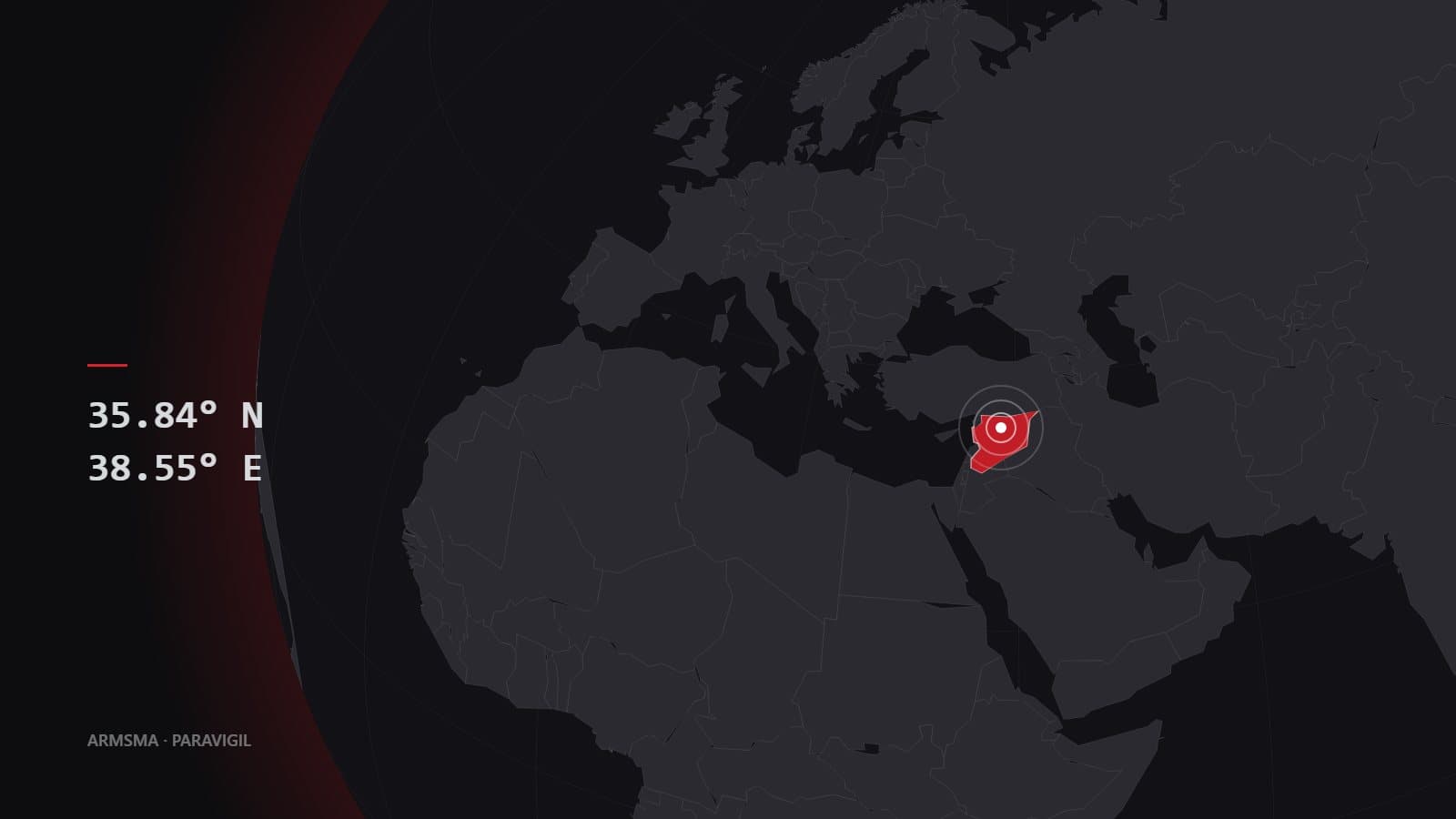
On 10 January 2026, Kurdish police withdrew from the last Kurdish neighbourhood of Aleppo, and Syrian government troops took control of the whole city. Several thousand Kurds fled to Afrin and to Kurdish-held areas east of the Euphrates, according to the ACCORD/ecoi.net compilation of reports on the crisis.
Eight days later, the government held Syria's largest dam.
In January, Damascus took from the US-backed, Kurdish-led Syrian Democratic Forces (SDF) much of the territory the SDF had held for years — the territory where it had guarded thousands of suspected Islamic State (IS) fighters. For civilians in north-east Syria, the shift brought displacement and siege. For everyone else, the question is what happens to those prisons.
How did the fighting start?
Early in January, intense fighting broke out in Sheikh Maqsoud and Ashrafieh, Aleppo's Kurdish neighbourhoods, between government troops, pro-government militias and SDF-affiliated forces, the ecoi.net compilation records, citing the Middle East Institute. According to the Associated Press, the clashes killed 23 people and displaced tens of thousands.
Both sides accuse each other of violating a March agreement to integrate north-east Syria and the Kurdish-led forces into the state, AP reported. After the Aleppo fighting stopped, SDF leader Mazloum Abdi said his forces would withdraw east of the Euphrates, tying this to measures for Kurdish rights announced by President Ahmed al-Sharaa.
How did the front move so fast?
On 16 January, the transitional defence ministry announced an operation to take Deir Hafer and Maskana; both fell within about 24 hours, according to reports compiled by ecoi.net. On 17 January, defence and interior ministry units and allied tribal militias launched an offensive from Raqqa and Deir ez-Zor.
By 18 January, state media said the army had full control of Tabqa and its military airport, Al Jazeera reported. Information Minister Hamza al-Mustafa said forces had secured the Euphrates Dam, which he described as "Syria's largest". Government troops seized the al-Omar oilfield, the country's largest, according to Reuters as cited by Al Jazeera, and the state oil company said the Rasafa and Sufyan fields could return to production.
Many of the captured areas are majority Arab. AP described Tabqa as the latest mostly Arab-majority area taken in Raqqa province, and the Syrian Observatory for Human Rights said government forces took over more than a dozen villages and towns in eastern Deir ez-Zor after the SDF withdrew.
What did each side accuse the other of?
Damascus accused the SDF of executing prisoners in Tabqa before withdrawing. The SDF denied it, saying it had moved detainees out of the prison, and accused government forces of firing on the facility, AP reported. An SDF video showed armed men in civilian clothes seizing munitions; it showed no bodies.
The Autonomous Administration of North and East Syria accused Damascus of violating a withdrawal agreement and attacking "on multiple fronts", according to Al Jazeera. Analyst Charles Lister, cited by ecoi.net, listed allegations against both sides: desecration of corpses and unguided munitions in civilian areas by government forces, and the killing of nearly 20 civilians by sniper fire and several extrajudicial executions by Kurdish fighters.
What happened to the IS detainees?
As the offensive advanced, analyst Rob Geist Pinfold of King's College London warned of the risk that about 10,000 IS prisoners held by the Kurdish group could escape, Al Jazeera reported.
Around 19–20 January, suspected IS members did escape from a prison in Shaddadi. The figures disagree, according to The Guardian as cited by ecoi.net:
- Syrian government: about 120 escaped.
- SDF: 1,500 escaped.
- Official figures: 81 recaptured after a curfew and searches.
On 21 January, Reuters reported that the US had begun moving IS detainees from Syria to Iraq — 150 in the first transfer, with up to 7,000 more planned. Under the ceasefire, the Syrian army took control of al-Hol camp.
Did the ceasefire hold?
A ceasefire agreed on 18 January was followed by renewed fighting. On 24 January it was extended by 15 days, with a call on the SDF to disarm and present an integration plan. On 30 January, the two sides agreed a comprehensive deal to integrate Kurdish military and civilian institutions gradually into the state, according to France 24 and Reuters as compiled by ecoi.net.
Government convoys entered Hasakah on 2 February and Qamishli the next day. The SDF is to be restructured into four brigades, and US forces withdrew from the al-Shaddadi base on 5 February.
What did it cost civilians?
In early March, UN OCHA reported 116,900 people still displaced in 165 communities in Aleppo and Hasakah provinces, with power cuts affecting water stations and medical care. On 11 March, Kobane had been under siege for more than 50 days, with medicine shortages, according to ecoi.net. Late in February, Asharq Al-Awsat reported an increase in IS lone-wolf attacks in Raqqa and Deir ez-Zor.
What we do not know
- How many people were killed overall. No total death toll has been published.
- How many IS suspects escaped from Shaddadi, and how many remain at large.
- Whether prisoners were executed in Tabqa. The allegation and the denial have not been independently verified.
What to watch
The 30 January deal moves the SDF's fighters, police and institutions into the state step by step: a presidential envoy was appointed in February, and prisoner exchanges were due to begin in March. Whether that integration holds, and who guards the remaining IS detainees and camps, will decide whether north-east Syria stabilises or becomes the next front.
Sources
- Al Jazeera: Syrian forces capture Tabqa and dam amid swift Raqqa offensive (18 January 2026)
- AP via Jamaica Gleaner: Government forces seize strategic town in Raqqa from Kurdish forces (19 January 2026)
- ACCORD / ecoi.net: Information collection on developments regarding the SDF and Kurdish areas (January–March 2026)
Related articles
Comments (0)
Sign in to join the discussion.
- No comments yet — be the first.