
Pakistan declared 'open war' on the Taliban — how did a Kabul drug-treatment hospital become its deadliest strike?
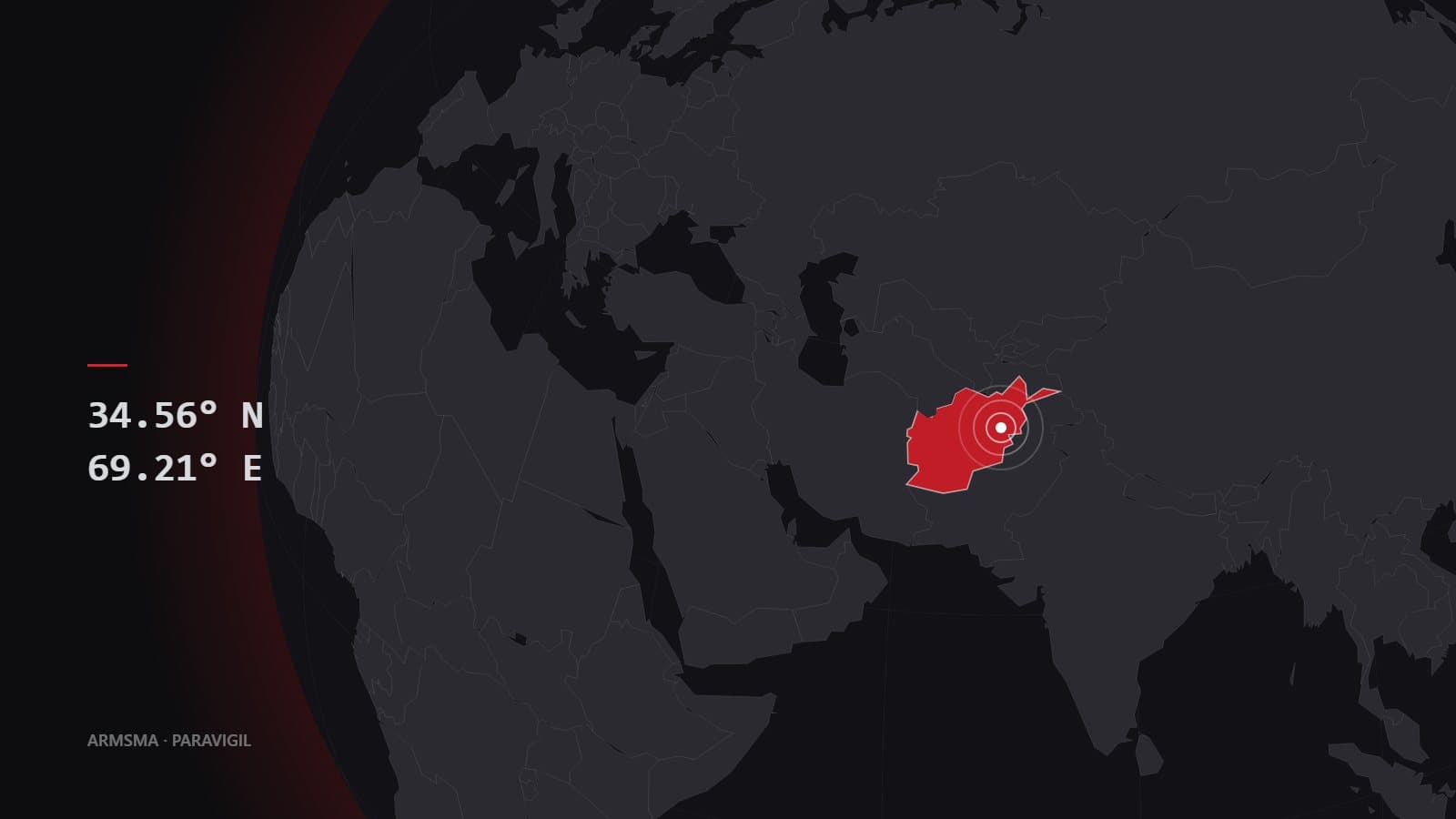
At about 9 p.m. on 16 March 2026, an AP reporter near Kabul's international airport heard a military jet overhead, then a very powerful explosion. The strike had hit the Omid Addiction Treatment Hospital, a 2,000-bed facility, destroying large sections of it, according to the Associated Press. By the next day rescuers were using cranes to pull people from the rubble. Most of those they reached were dead.
Afghanistan's interior ministry spokesman put the toll at at least 408 killed and 265 injured. Pakistan said it had struck a military site nearby and called the hospital accusations "entirely baseless".
The strike came less than three weeks after Pakistan's defence minister declared his country to be in "open war" with Afghanistan's Taliban government. It became one of the deadliest single attacks of a conflict between two neighbours that share a long border, militant networks and millions of displaced people — and for which no ceasefire has held.
How did "open war" begin?
On 26–27 February, Pakistani air strikes hit Kabul, Kandahar in the south and Paktia province in the southeast, The Irish Times reported, citing AP. Pakistan said the strikes were retaliation for Afghan cross-border attacks. According to AP, those Afghan attacks had themselves been a response to earlier Pakistani airstrikes that Kabul said killed civilians.
Hours later, Defence Minister Khawaja Mohammad Asif wrote on X: "Our patience has now run out. Now it is open war between us." He accused the Taliban of turning Afghanistan "into a colony of India" and of "exporting terrorism", without giving details or evidence. India denies Pakistan's repeated claims that it backs the Baloch Liberation Army and the Pakistani Taliban.
The fighting broke a ceasefire that Qatar and Turkey had mediated months earlier; AP describes it as a Qatar-brokered ceasefire from October. Pakistan named its campaign "Operation Ghazab lil Haq", launched on 26 February, according to a UN report summarised by KabulNow.
Who lost how many — and can anyone tell?
The first casualty claims could hardly have been further apart. The figures below are each side's own, and The Irish Times notes that none could be independently verified:
- Afghan defence ministry: 55 Pakistani soldiers killed and "several others" captured alive; 8 Afghan soldiers killed and 11 wounded; 19 Pakistani posts and two bases destroyed.
- Pakistan's information minister, Attaullah Tarar: 2 Pakistani soldiers killed and 3 wounded.
- Mosharraf Ali Zaidi, spokesperson for Prime Minister Shehbaz Sharif: at least 133 Afghan fighters killed and more than 200 wounded, 27 Afghan posts destroyed, 9 fighters captured. He denied that any Pakistani soldiers had been captured.
The civilian count is better documented, because the UN keeps it. Between 26 February and the night of the hospital strike, the UN Assistance Mission in Afghanistan had recorded at least 76 civilians killed and 213 injured, UNAMA said on 17 March. One strike was about to change that number several times over.
What happened at the Omid hospital?
The hospital had been renamed and expanded about a year earlier from the Ibn Sina Drug Addiction Treatment Hospital, AP reported. It stands beside the former NATO base Camp Phoenix, which the Taliban took over after 2021; AP said it was unclear what now occupies that site.
Pakistan's information ministry said the military had "precisely targeted" Camp Phoenix as an ammunition and equipment store, and that the hospital was several kilometres away. AP noted that Google Maps shows another location east of Kabul also labelled Camp Phoenix, and that the distance claim could not be verified. Taliban spokesman Zabihullah Mujahid called the strike a crime against humanity and said the dead were innocent civilians and addicts.
The figures differ by source:
- Afghan interior ministry (17 March, via AP): at least 408 killed, 265 injured.
- Taliban figures given to UNAMA: more than 411 killed and more than 261 wounded, according to KabulNow.
- UNAMA, independently verified (May report): 269 killed and 122 injured — with a warning that the real toll could be "significantly higher" because not all victims could be accounted for.
Pakistan's embassy in Kabul told UNAMA that its strikes "were directed solely against terrorist and military infrastructure" and denied targeting any hospital or civilian facility.
How large is the civilian toll so far?
For the first three months of 2026, UNAMA counted at least 372 civilians killed and 397 wounded in the Pakistan–Taliban hostilities, according to KabulNow's summary of its report. More than half of those casualties came from the Omid strike. Airstrikes caused 62% of all civilian casualties, and artillery and mortar fire along the border 35%.
About 94,000 people were displaced inside Afghanistan as of 1 April, the report said. This adds to an earlier movement of people: the UN refugee agency said 2.9 million people returned to Afghanistan in 2025, and Pakistan has been expelling undocumented migrants since October 2023, The Irish Times reported.
What we do not know
- The real military losses on either side. Every figure from February is a party's claim; none has been independently verified.
- What, if anything, was at Camp Phoenix on 16 March, and how far the strike point was from it.
- The final hospital toll. UNAMA's verified figure is a floor, not a total.
What to watch
By May, no agreement to stop the fighting had been reached, clashes continued intermittently along the border, and trade, transit and land travel between the two countries had been suspended for about eight months, according to KabulNow. China, Russia, Turkey and Saudi Arabia have offered to mediate. The UN has repeatedly called for an immediate ceasefire and reminded both parties that attacks on hospitals are "strictly prohibited". Whether any of those offers turns into talks is the question that matters for civilians on both sides of the border.
Sources
- The Irish Times / AP: Pakistan says it is in 'open war' with Afghanistan (27 February 2026)
- AP via Anchorage Daily News: Afghanistan blames Pakistan for Kabul hospital strike believed to have killed over 400 (17 March 2026)
- UNAMA: Statement on an airstrike on a medical facility in Kabul (17 March 2026)
- KabulNow: UN reports 372 Afghan civilians killed, 397 injured in Taliban–Pakistan conflict in three months (May 2026)
Related articles
Comments (0)
Sign in to join the discussion.
- No comments yet — be the first.