
Iran's supreme leader killed on the first day: how far did the war of 28 February reach?
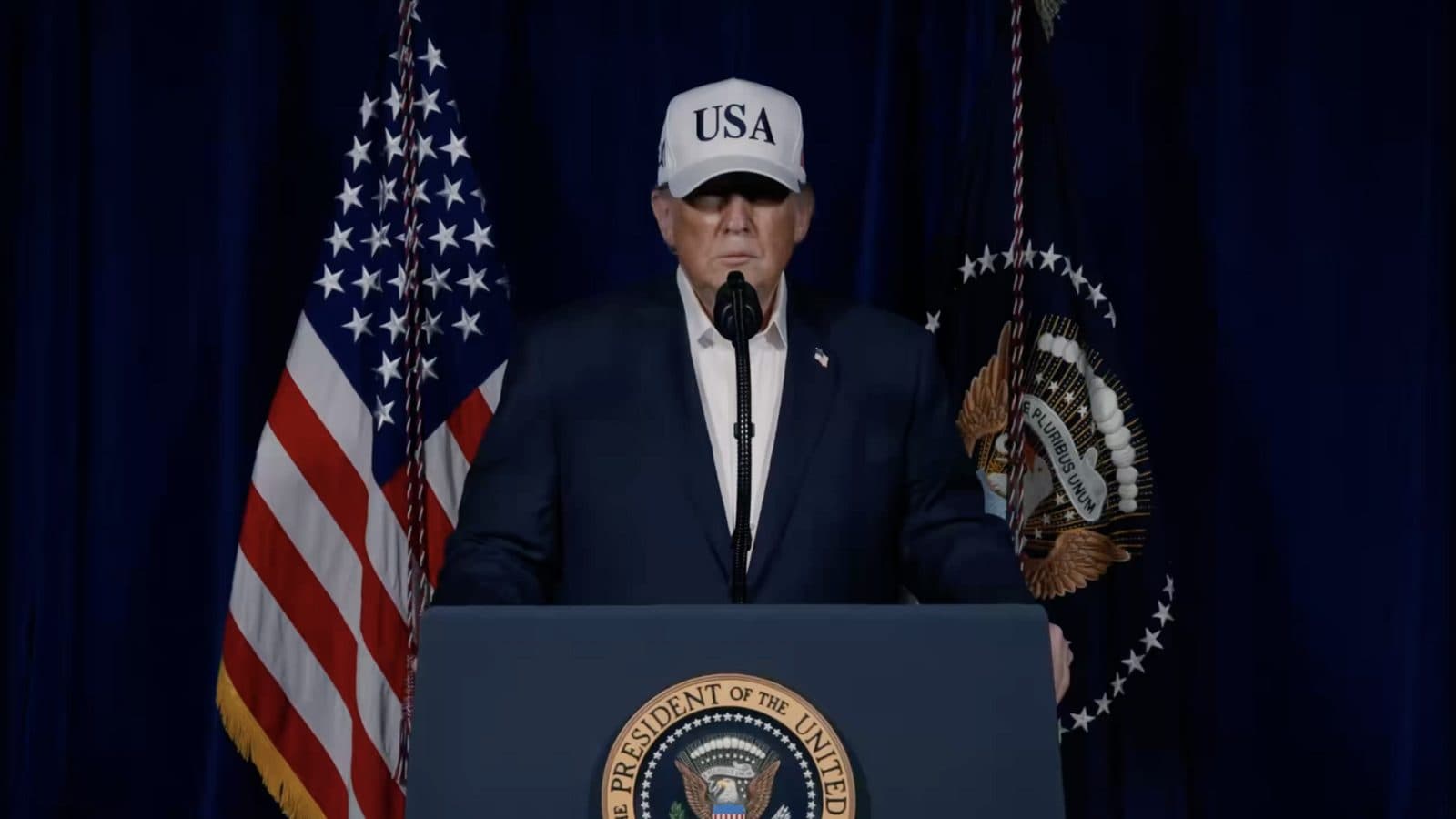
Within hours of the first strikes on Saturday, 28 February 2026, President Donald Trump announced that Iran's supreme leader was dead. Early the next morning Iranian state television confirmed it: Ayatollah Ali Khamenei, 86, in power since 1989, had been killed in the opening wave of a joint US and Israeli attack, AFP reported.
Iran's judiciary said Ali Shamkhani, a senior adviser to Khamenei, and General Mohammad Pakpour, the head of the Revolutionary Guards, had also been killed.
AFP described the operation as apparently the first US military action of this scale aimed at toppling a foreign government since the 2003 invasion of Iraq. That ambition, and Iran's answer to it, turned a bombing campaign into a regional war that reached shipping lanes, Gulf cities and Lebanon within days.
What was the stated aim?
Trump vowed there would be no let-up until the Islamic republic fell and urged Iran's security forces to stand down. "This is the single greatest chance for the Iranian people to take back their Country," he said, according to AFP. He said Iran's leaders had not compromised enough on the nuclear programme, but made clear that the goal was regime change rather than a nuclear deal.
Israeli Prime Minister Benjamin Netanyahu told Iranians that "this is your time to join forces, to overthrow the regime and to secure your future." Israel's army chief, Lt. Gen. Eyal Zamir, said the operation was on a "completely different scale" from the 12-day war of June.
The strikes came while diplomacy was still under way. Trump's envoys had negotiated with Iran's foreign minister in Geneva on the Thursday before, and Oman, the mediator, had reported a breakthrough on the Friday, with Iran reportedly agreeing not to stockpile uranium.
What did the first day cost?
Iran's Red Crescent said the strikes killed 201 people on the Saturday and injured hundreds. Iran's judiciary said a strike on a school in the south of the country killed 108 people; AFP said it could not access the site to verify the toll or the circumstances.
Iran answered with missiles. Its state broadcaster said 27 US bases in the region, Israel's military headquarters and a defence industries complex in Tel Aviv had been targeted. Explosions were heard in Doha, Dubai and Manama, and two people were killed in Abu Dhabi. The Revolutionary Guards contacted ships to announce the closure of the Strait of Hormuz, though AFP said it was unclear whether the threat was being enforced.
Several states, among them Iran, Iraq, Kuwait, Syria, the United Arab Emirates and Israel, closed their airspace at least in part.
How many people had died six weeks later?
By 7 April, when the US and Iran agreed a two-week ceasefire, AFP's regional tally gave these figures, all from governments, militaries, health authorities or rescue services that AFP could not independently verify:
- Iran: at least 3,636 killed, including 1,701 civilians (at least 254 of them children) and 1,221 military personnel, according to the US-based rights group HRANA (7 April). Iran's deputy health minister gave at least 1,937 dead, as of 26 March. Iran's government had released no recent overall toll.
- Israel: 17 Israelis, including four minors, killed by Iranian missiles, plus two Filipino nationals and one Thai national.
- Gulf states: 41 killed, 22 of them civilians, according to Gulf authorities and US Central Command.
- US forces: 13 service members killed, seven in the Gulf and six in the crash of a refuelling aircraft in western Iraq that the US military said was not caused by hostile or friendly fire; about 300 wounded, most slightly.
- Iraq: at least 117 killed, by AFP's count of announcements from armed groups and officials.
- Lebanon: 1,530 killed, according to the health ministry, after Hezbollah entered the war in March.
AFP said reporting restrictions in Iran prevented it from reaching strike sites or checking Iranian figures.
Who leads Iran now?
On the day of the attack, state television said President Masoud Pezeshkian and two other officials would lead the country through a transitional period. By early April Iran had a new supreme leader: Mojtaba Khamenei, 58, the son of the man killed on the first day.
On 9 April Al Jazeera reported a statement from him, read on state television to mark 40 days since his father's death. He had not been seen or heard from since the war began, the outlet noted. He claimed a "final victory", said Iran would demand compensation and warned: "Our hands are on the trigger."
What we do not know
- The true death toll in Iran. HRANA's figure and the Iranian government's differ by well over a thousand, and neither could be verified by AFP.
- What happened at the school in southern Iran, which AFP could not reach.
- Exactly how Khamenei was killed: the sources say only that he died in the opening strikes.
What comes next?
The ceasefire agreed on 7–8 April through Pakistani mediation paused the air war but left the core questions open: control of the Strait of Hormuz, Iran's nuclear programme, and whether Lebanon was covered at all. Those disputes shaped the months that followed, and each figure above may still be revised as access improves.
Sources
- AFP via Al-Monitor: Iran leader Khamenei killed in massive US and Israeli attack, Trump says (28 February 2026)
- AFP via Institut kurde de Paris: War in the Middle East — casualty figures from across the region (8 April 2026)
- Al Jazeera: Khamenei says Tehran "astonished the world" during US-Israeli war on Iran (9 April 2026)
Related articles
Comments (0)
Sign in to join the discussion.
- No comments yet — be the first.