
Two ceasefires in five months: why did the Thailand–Cambodia border war flare again?
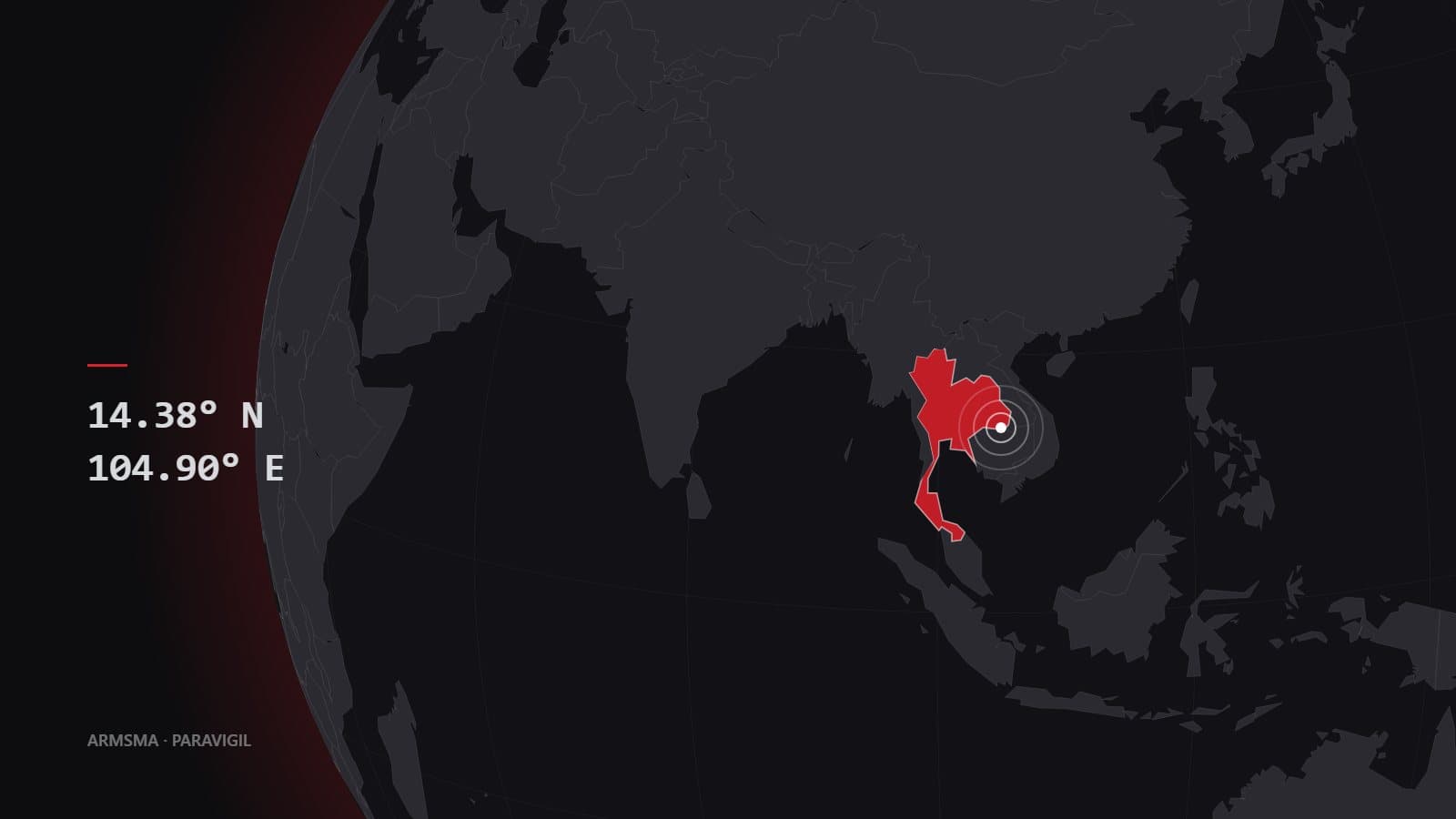
On a Sunday night in early December 2025, Thai army engineers building a logistics path on their side of the border with Cambodia came under fire, according to Thai military sources quoted by the Asia Media Centre. Two Thai soldiers were killed and eight wounded in the Chong An Ma area of Ubon Ratchathani province. By Monday, 8 December, Thailand had confirmed airstrikes on Cambodian targets.
Those strikes ended a ceasefire that had held since July. What followed was about 20 days of fighting with fighter jets, rockets and artillery, News On AIR reported, before the two countries signed a new truce on 27 December.
The return to war matters beyond the two countries. The July deal had been brokered by Malaysia and pushed through by US President Donald Trump, and it was formalised at a regional meeting in October, according to the Associated Press. It still did not hold.
How did a signed truce break down?
The trouble began weeks before the airstrikes. In November Thailand suspended the ceasefire, accusing Cambodia of laying new minefields, the Asia Media Centre reported. At least seven Thai soldiers had lost limbs to landmines since the July fighting ended.
Cambodia says the mines are left over from its civil war, which ended in the late 1990s, according to the AP. Throughout the autumn, both countries kept up what the AP called a "bitter propaganda war", and minor violence continued along the border.
Who fired first?
Each side says the other did. Thailand's air force said its strikes hit only military installations, citing Cambodian moves of heavy weapons and combat units. One target, Thailand said, was a casino that Cambodian forces allegedly used to launch drones. Prime Minister Anutin Charnvirakul said the action was "in accordance with international standards" (Asia Media Centre).
Cambodia's defence ministry called the Thai account "false information" and said Thailand had started the fighting after "numerous provocative actions". The Cambodian military also accused Thai forces of using "toxic gas" in two locations. Thailand has not confirmed that claim. According to the Cambodian defence ministry, only Thailand used airstrikes (AP).
How many people were killed?
The figures depend on who is counting. On the first day, Cambodia's information minister, Neth Pheaktra, said four Cambodian civilians had been killed and nine injured. A 55-year-old Thai civilian died during the evacuation (Asia Media Centre).
By the time the ceasefire was signed, Thai officials said 26 soldiers and one civilian had been killed as a direct result of the fighting since 7 December. They also counted 44 civilian deaths from what they called collateral effects. Cambodia said 30 of its civilians had been killed and 90 injured, but it gave no official figure for its military dead (AP).
News On AIR put the total at at least 101 killed. The two governments' figures together add up to the same number. That total would not include any Cambodian soldiers who were killed.
Many more people lost their homes. Tens of thousands fled in the first days, the Asia Media Centre reported. By the end of December, more than half a million civilians had been displaced on both sides, according to News On AIR.
What does the new ceasefire promise?
Defence ministers Tea Seiha of Cambodia and Nattaphon Narkphanit of Thailand signed the agreement at a border checkpoint on 27 December, after three days of lower-level military talks. It took effect at noon local time, the AP reported.
The text bars further troop movements and military use of each other's airspace, and it lists 16 de-escalation measures. Both sides commit to international agreements against land mines and to working together against transnational crime, mainly online scam operations. They also agreed to resume border demarcation and to refrain from spreading what the text calls "fake news".
One promise was tested quickly. Thailand agreed to send home 18 Cambodian soldiers it had held since the July fighting, once the truce had held for 72 hours (AP). On 31 December the 18 were handed over at a border checkpoint. Cambodia's defence ministry said they had been held for 155 days (News On AIR).
What we do not know
- Cambodian military losses. Cambodia has not published how many of its soldiers were killed.
- The "toxic gas" claim. Cambodia's accusation has not been independently verified, and Thailand has not confirmed it.
- Who restarted the war. Both governments say they acted in self-defence, and their accounts of the first exchange of fire contradict each other.
- The mines. Thailand says they are newly laid; Cambodia says they date from its civil war. No independent finding has been published in the sources we used.
What to watch
The December agreement repeats much of what was promised in July and October. Whether it lasts will depend on what it adds: border demarcation, mine clearance and the return of the displaced. If people on both sides can go home and stay there, it will have achieved what the first ceasefire did not.
Sources
Related articles
Comments (0)
Sign in to join the discussion.
- No comments yet — be the first.