
700 eye injuries in three days: what did the UN find behind Iran's January crackdown?
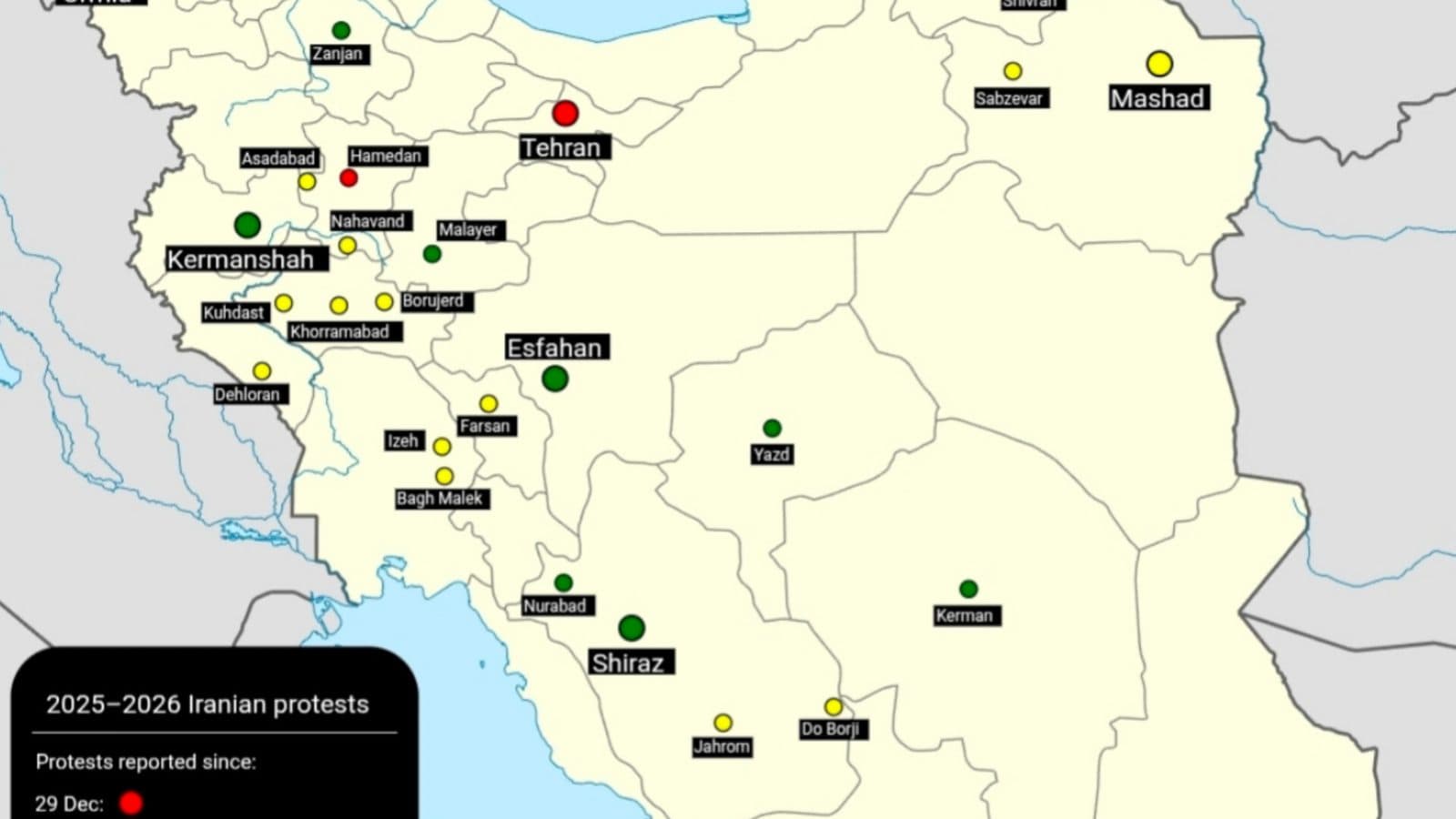
Between 8 and 10 January 2026, more than 700 people came to a single hospital in Tehran, Farabi, for treatment of eye injuries. The figure appears in the September 2026 report of the UN's Independent International Fact-Finding Mission on Iran, as summarised by the Center for Human Rights in Iran (CHRI).
Those three days were the most violent phase of a crackdown on protests that had begun on 28 December 2025. The mission concluded that the state's response included acts amounting to crimes against humanity: murder, imprisonment, torture and other inhumane acts, committed as part of a "widespread and systematic attack directed against a civilian population".
The finding matters because the scale of the killing is still contested. Months later, no one, including the UN, can say exactly how many people died.
How did protests over prices become a national uprising?
The protests started over economic hardship and grew into nationwide calls to end clerical rule, Reuters reported in mid-January, describing them as the most serious domestic unrest since the 1979 revolution. According to the UN mission, killings took place on a large scale in all 31 provinces, with particularly high numbers in Tehran, Karaj, Mashhad, Isfahan and Rasht.
On 8 January the authorities cut internet and mobile communications nationwide. The UN mission said the shutdown lasted nearly five months, the longest nationwide shutdown on record. After about 200 hours offline, the monitoring group NetBlocks reported connectivity at around 2% of normal levels, Reuters said.
Why do the death tolls differ so widely?
Each count was made under that blackout, and each grew as information leaked out:
- 17 January: the US-based Human Rights Activists News Agency (HRANA) said it had verified 3,090 deaths, including 2,885 protesters (Reuters, via Al-Monitor).
- 21 January: in the first official toll, Iran's Martyrs Foundation said 3,117 people had been killed, of whom 2,427 were civilians and security forces, Al Jazeera reported. The same day HRANA counted 4,519 deaths, among them 4,251 protesters, 197 security personnel and 35 people under 18, with 9,049 further deaths under review.
- 1 February: HRANA had confirmed 6,563 deaths, RFE/RL reported, adding that most deaths were reported on 8 and 9 January and that other estimates put the toll "many times higher".
The UN mission said it could not establish a definitive figure because government data lacked detail and differed from that of credible organisations. It said it had "strong grounds to believe" that the true number of deaths and injuries is significantly higher than the government's.
Who else was targeted?
A credible human rights organisation documented at least 221 children killed, a count the mission said is not final. Credible organisations reported tens of thousands of people detained. Healthcare facilities in at least nine provinces were reportedly overwhelmed, and the mission documented interference with medical care.
The death penalty followed. At least 58 people were executed on security-related charges in 2026, 29 of them in connection with the protests since March, according to the mission. More than 70 people, including women and juveniles, were reportedly at imminent risk of execution or a death sentence. At least three people sentenced to death were under 18 at the time of the alleged offences, including two 17-year-old boys; the mission noted that such sentences are "absolutely prohibited under international human rights law".
In January, US President Donald Trump threatened "very strong action" if Iran executed protesters, then said Iran's leadership had cancelled scheduled hangings, Reuters reported. Iran had neither announced those executions nor said it had cancelled them.
What we do not know
- The number of dead. HRANA counts only deaths it can confirm, the government's figure is lower and unexplained in part, and the internet shutdown hid much of what happened.
- How many of those detained remain in custody, and on what charges.
- How many cases the mission's evidence covers: it interviewed 73 people, a small sample of a nationwide crackdown.
What comes next?
A finding of crimes against humanity does not by itself bring anyone to court. What it creates is a documented record. The next tests are whether the more than 70 people reported at risk of execution are spared, and whether the record ever reaches a body able to act on it.
Sources
- Center for Human Rights in Iran: UN — Iranian authorities committed crimes against humanity in January 2026 suppression of nationwide protests (24 September 2026)
- Reuters via Al-Monitor: Death toll in Iran protests over 3,000, rights group says (17 January 2026)
- Al Jazeera: At least 3,117 people killed during Iran protests, state media reports (21 January 2026)
- RFE/RL (Radio Farda): Faces behind the numbers — Iran protesters killed (1 February 2026)
Related articles
Comments (0)
Sign in to join the discussion.
- No comments yet — be the first.