
Fifteen seconds at Adamuz: was the rail already broken before Spain's deadliest train crash in a decade?
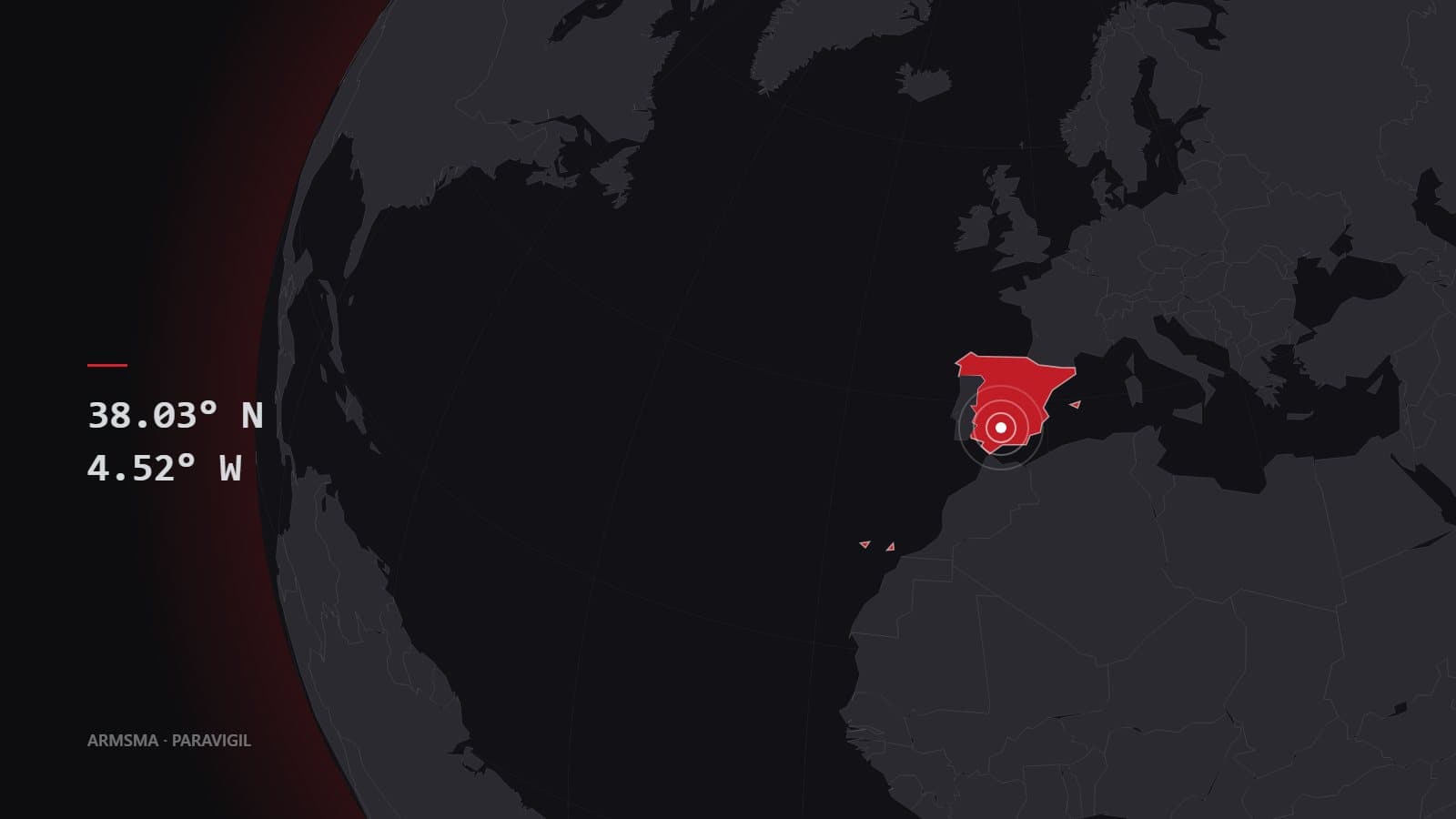
At 19:43:29 on Sunday 18 January 2026, an Iryo high-speed train travelling at 205 km/h registered its first sign of derailment near Adamuz, in Córdoba province. Nine seconds later, the derailment triggered emergency braking on a Renfe Alvia train on the other track. At 19:43:44 the two collided.
That fifteen-second sequence comes from a draft document of Spain's Railway Accident Investigation Commission (CIAF), reported by Europa Press. The Alvia, it says, had no time to stop.
The crash killed 46 people. It is described as Spain's deadliest rail accident in a decade and the largest rescue operation in the country since the 2013 Santiago de Compostela disaster, according to CTIF, the international association of fire and rescue services. The central question now is not what the trains did, but what the track did before they arrived.
What happened on the line?
The Iryo train, a Frecciarossa 1000, derailed at high speed on the Madrid–Seville line and sent carriages onto the adjacent track. The Alvia then struck them head-on at about 200 km/h, CTIF reports.
The Civil Guard received a call from the 112 emergency number at 19:47 and reached the site by 20:00, the Catalan daily Ara reported. Civil Guard sources said the Alvia, about 800 metres further on and in worse condition, was found at 20:15; some media cited witnesses who placed that discovery later.
Crews from across Andalusia worked through the night with heavy rescue equipment. A field hospital was set up in a local sports centre, and the Red Cross sent crisis-support teams, according to CTIF.
How many people were killed and injured?
By 22 January, Ara reported 45 dead, matching the number of missing-person reports filed by families; the last two bodies were found in the second carriage of the Alvia, which had already been inspected once. The toll later stood at 46, according to CTIF and Europa Press.
Injury figures differ by source. CTIF gives 292 injured, with Spanish media reporting 15 in critical condition. Europa Press, in March, wrote of "more than 120" injured.
Was the rail broken before the train arrived?
On 23 January the CIAF published a note on its first findings, available as a PDF. The break in the rail was at a weld between two rail sections. Investigators found notches on the right-hand wheels of carriages 2, 3, 4 and 5 of the Iryo train, compatible with striking the head of a fractured rail.
They also found compatible marks on wheels of three trains that had passed through Adamuz earlier that day, at about 17:21, 19:01 and 19:09. On that basis the CIAF stated the hypothesis that the rail had fractured before the Iryo train passed, and therefore before the derailment. It stressed that this was provisional and had to be verified by further tests, including metallurgical analysis of the rail samples.
The later draft reported by Europa Press goes further, again as a hypothesis: a voltage drop recorded by track circuits is compatible with a rail break about 22 hours before the derailment. The broken weld, at km 318.681, was documented as having been made on the night of 24 May 2025. Investigators also found "inconsistencies" in the infrastructure manager Adif's weld records, including possible changes to records and signatures that did not appear to be original, and passed this to the Civil Guard.
Who is investigating — and what has been ruled out?
Two investigations run in parallel. A court in Montoro is examining whether there is criminal liability; the CIAF is establishing the technical cause and will recommend changes, Ara reported. The CIAF says it never seeks to assign blame.
A Civil Guard report to the Montoro court, cited by Europa Press, called sabotage or terrorism "highly improbable" and found no evidence that the driver's conduct caused the crash, while stating that no line of inquiry could yet be fully confirmed or ruled out.
In the first days, the Ministry of Transport said there was no track-maintenance problem on the section, which had had its track and crossings fully replaced in May 2025 at a cost of more than €700 million, according to Ara. A train drivers' union had earlier warned Adif about track wear on the same corridor, CTIF reports.
What we do not know
- Why the weld failed. The CIAF's working hypothesis is a rail fracture at a weld; laboratory results had not been published in the sources we opened.
- When exactly it broke. The "22 hours" figure is a hypothesis from a draft document, not a final finding.
- What the weld-record inconsistencies mean. They were referred to the Civil Guard; no conclusion is public in our sources.
- The final number of injured, given the gap between 292 and "more than 120".
What to watch next
The CIAF's final report is the only document whose conclusions count, the commission itself warns. If it confirms that earlier trains had already run over a broken rail, the question shifts from one weld to how the network detects a break — and how quickly a warning reaches the next train.
Sources
- CTIF: Spain's deadliest railway crash in a decade left 46 dead near Adamuz in January 2026
- Ara: Two more victims of the Adamuz accident have been found, bringing the total to 45 (22 January 2026)
- CIAF: note on the Adamuz investigation, 23 January 2026 (PDF, in Spanish)
- Última Hora / Europa Press: CIAF draft on a voltage drop compatible with a rail break (16 March 2026, in Spanish)
Related articles
Comments (0)
Sign in to join the discussion.
- No comments yet — be the first.