
Cameras switched off, a killer unnamed: what Saif al-Islam Gaddafi's death means for Libya's stalled election
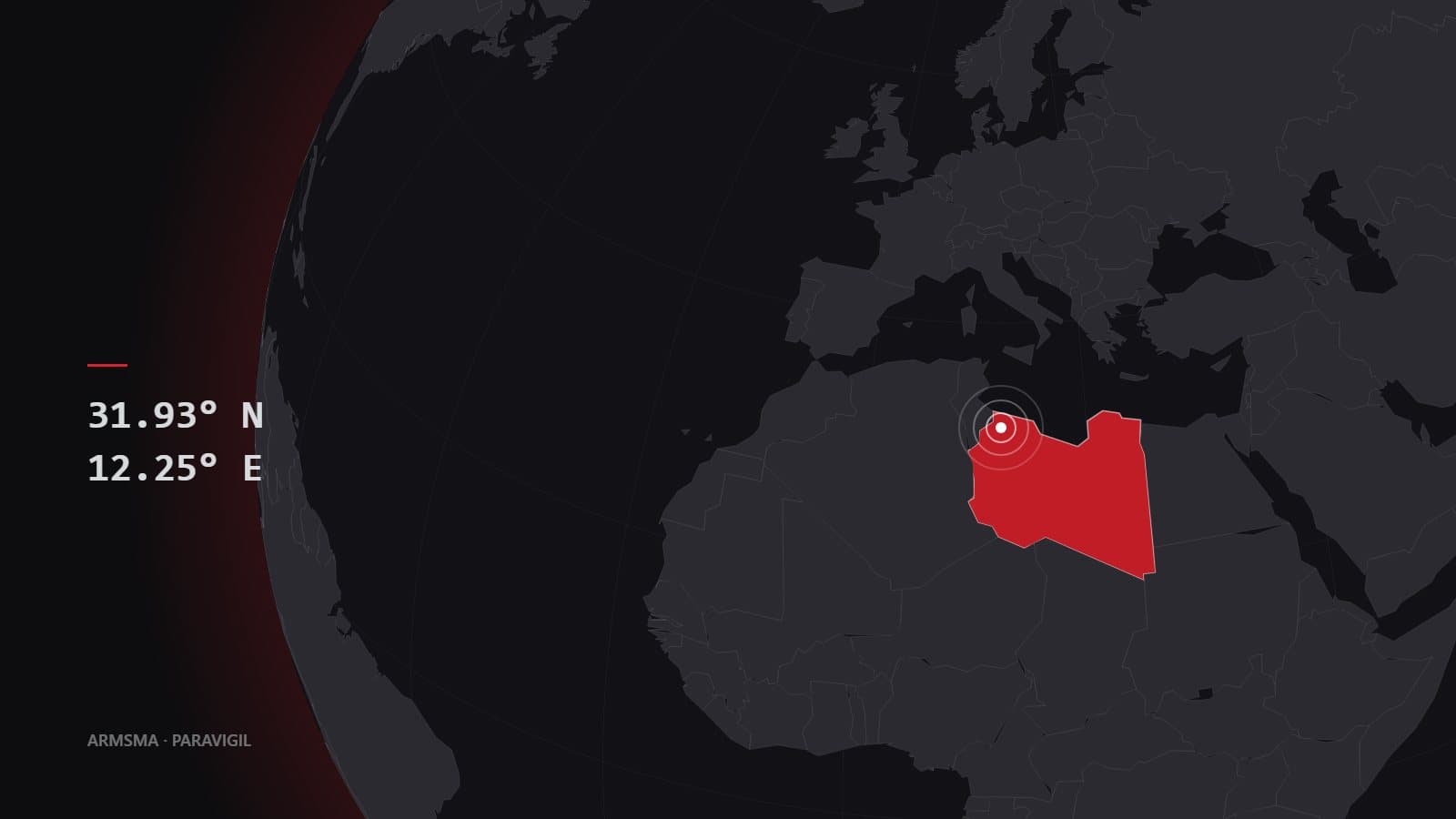
Before they came in, the attackers switched off the cameras. That is how Saif al-Islam Gaddafi's political team described his killing on 3 February 2026: "four masked men" stormed his house in Zintan, about 136km southwest of Tripoli, after disabling its security cameras in a "desperate attempt to conceal traces of their heinous crimes", Al Jazeera reported. The team called it a "cowardly and treacherous assassination".
Gaddafi, 53, was the most prominent son of Muammar Gaddafi, the Libyan leader killed in 2011. His lawyer, Khaled al-Zaidi, and his political adviser, Abdulla Othman, announced the death on Facebook.
He had been, for years, the most divisive name in Libyan politics: wanted by the International Criminal Court, sentenced to death in absentia, and still a presidential candidate. His disputed candidacy helped derail the 2021 election. His death removes that candidate — but not the questions of who can run, and who decides.
What happened in Zintan?
Libya's attorney general's office said forensic examinations showed he died of gunshot wounds and opened an investigation to identify suspects, The New Arab reported. According to Libya Security Monitor, he confronted the attackers in his garden and was shot 19 times, including once in the head; his time of death was later given as 17:57.
There is a second account. Il Sole 24 Ore, citing Al Arabiya and Libya al-Ahrar and a source close to the family, reported that he was killed "following heavy armed clashes" in the Zintan area, with fighting between local militias and militias loyal to the former regime lasting several hours that afternoon. The same report said four perpetrators "allegedly injured him seriously while he was in the garden of his home" and fled.
A Tripoli-affiliated unit, Brigade 444, denied involvement, saying it "had no field deployment in Zintan", The New Arab reported. Local sources told the outlet that security units previously tied to his protection sealed off the area afterwards. It is unclear who guarded him or how the attackers got in.
Why did one man matter so much?
Born in Tripoli in June 1972 and educated at the London School of Economics, he led efforts from the early 2000s to repair Libya's relations with the West, including talks on weapons of mass destruction and compensation for Lockerbie victims, Al Jazeera reported. In 2011 he backed the crackdown on the uprising. "We fight here in Libya, we die here in Libya," he told Reuters.
A militia captured him in the desert as he tried to flee to Niger and flew him to Zintan. A Tripoli court sentenced him to death in absentia in 2015, and the ICC sought him for alleged crimes against humanity. He was later released under an amnesty and spent years in hiding in Zintan.
In November 2021 he announced his candidacy for president. He was disqualified because of his conviction; when he appealed, fighters blocked the court. The dispute contributed to the collapse of the election and a return to political deadlock, Al Jazeera reported. UN-backed polls to unify the country have been postponed indefinitely, Africanews noted, and Libya remains divided between rival governments in the east and west.
Who responded — and who did not?
Khaled al-Mishri, former head of the High State Council, called for an "urgent and transparent investigation", according to Al Jazeera. Mohamed al-Menfi, head of the Presidential Council, urged restraint until the investigation was complete and warned that inflammatory rhetoric could undermine reconciliation and elections. Vice-president Moussa al-Kouni wrote: "No to political assassinations, no to violence, and no to imposing demands by force," The New Arab reported.
Prime Minister Abdul Hameed Dbeibah said "Libyan blood, regardless of who it belongs to, is a red line that must not be crossed", and the UN mission urged a swift, transparent investigation, according to Libya Security Monitor. The same outlet noted that no eastern authorities had issued public statements.
He was buried on 6 February after Friday prayers in Bani Walid, about 175km south of Tripoli, beside his brother Khamis. Thousands of supporters marched with portraits of his father and the pre-2011 green flag, Libya Security Monitor reported. His special representative, Omar Abu Sharida, said his team "will not accuse any party of the assassination until the Attorney General's Office completes its investigation."
What we do not know
- Who killed him, and why. On 5 March the public prosecutor's office said it had ordered the arrest of three suspects and knew when and where the killing took place, but gave no further details, Africanews reported. No one has been publicly named, and no group has claimed the killing.
- How it happened. His political team describes a raid on his home; a family source quoted by Il Sole 24 Ore describes militia clashes around Zintan. Both accounts place the final attack in or near his garden.
- When he was freed. Al Jazeera and Africanews say he was released in 2017; Il Sole 24 Ore gives 5 July 2016, under a 2015 amnesty.
What to watch
The investigation is the first test: whether the three arrest orders lead to named suspects and a trial, in a country where courts have themselves been blocked by gunmen. The second is political. Saif al-Islam's candidacy was one of the obstacles to Libya's 2021 vote. With him gone, watch whether the rival authorities agree on rules for a new election — or whether his killing becomes one more grievance in the stalemate.
Sources
- Al Jazeera — Saif al-Islam Gaddafi, son of former leader, killed in Libya (3 February 2026)
- Il Sole 24 Ore — Saif Kadhafi killed in militia clashes in Zintan (3 February 2026)
- The New Arab — Everything we know about the killing of Saif al-Islam Gaddafi (4 February 2026)
- Libya Security Monitor — Saif Al-Islam Al-Qadhafi laid to rest in Bani Walid amid investigation (February 2026)
- Africanews — Libyan authorities order the arrest of three suspects in killing of Saif al-Islam Gaddafi (6 March 2026)
Related articles
Comments (0)
Sign in to join the discussion.
- No comments yet — be the first.