
Three blasts as the fast ended: why is the Maiduguri death toll still not settled?
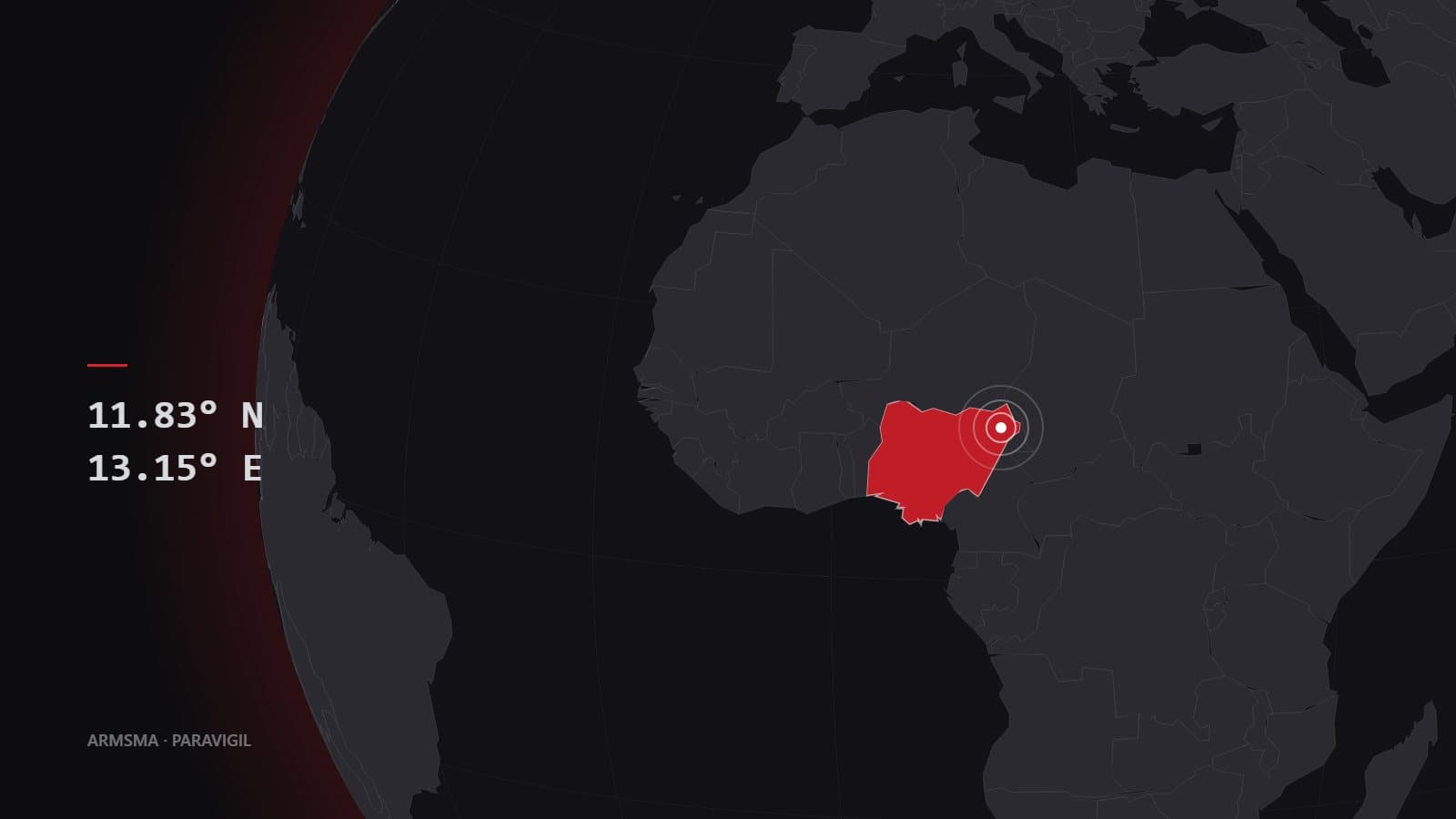
Caleb Jonah was at the entrance of the University of Maiduguri Teaching Hospital at about 7:30 on the evening of Monday, 16 March 2026. "Before I could process what was going on I heard the deafening blast and I passed out," he told the Associated Press. He survived with injuries to his leg and hand.
A few minutes later two more blasts struck the Monday Market and the nearby Post Office business hub, about 4 kilometres away, the AP reported. The explosions came just after Muslims had ended their daily Ramadan fast, according to AFP.
Maiduguri, the capital of Borno State, is where Boko Haram began its insurgency in 2009. A coordinated attack inside the city, rather than on its outskirts, raises a question that matters to its roughly 1.2 million residents: how safe are the places they cannot avoid, a hospital, a market, a post office?
What happened in those few minutes?
"Preliminary investigation reveals that the incidents were carried out by suspected suicide bombers," Borno police spokesman Nahum Kenneth Daso said, according to AFP. Military spokesman Sani Uba said suspected Boko Haram suicide bombers set off improvised explosive devices at the post office area, the Monday Market axis and the hospital entrance.
"We were sitting (at the market) when we suddenly heard a loud explosion," Modu Bukar, 27, told AFP. Mala Mohammed, 31, described people fleeing towards the post office, where a second blast then went off.
In a statement the next day, Uba warned that "the terrorists may have deployed multiple suicide bombers into Maiduguri", describing coordinated assaults meant to cause mass casualties, the Daily Trust reported via allAfrica.
How many people died?
Police said at least 23 people were killed and 108 wounded, the AP and AFP reported. Médecins Sans Frontières gave the same death toll and said more than 100 were injured; its teams helped treat 108 patients at two hospitals (MSF).
The figures did not stay there. Surajo Abdullahi, zonal coordinator of the National Emergency Management Agency, confirmed at least 26 dead and 146 injured, the Daily Trust reported: 108 admitted to the teaching hospital, 20 to Umaru Shehu Hospital and 17 to Maiduguri Specialist Hospital. A member of an anti-jihadist militia told AFP the toll could be as high as 31. "I was surprised they said only 23 died," a resident told the Daily Trust.
So three figures stand side by side: 23 from the police, at least 26 from the emergency agency, up to 31 from a militia member. None of them, as of the reports of 17 and 18 March, was described as final.
What did the hospitals face?
"The Emergency room was full of patients with different kinds of traumatic injuries," said Dr Alain Kikwaya, MSF's medical team leader in Maiduguri. MSF teams stabilised patients at the State Specialist Hospital and sent the most critical to the teaching hospital, where a second team supported triage. No patients or staff in MSF's diphtheria treatment unit at the hospital gate were hurt (MSF).
Hospitals urgently needed blood, volunteer security assistant Mohammed Hassan told the AP. Some health workers blamed the slow response to appeals on "the ongoing Ramadan fast", since many donors cannot give blood during fasting hours (Daily Trust).
Why did this happen in the city itself?
The bombings came less than 24 hours after the military repelled militant attacks on the outskirts of Maiduguri, and some residents suggested those may have been a distraction, the AP reported. AFP said a military post in the suburb of Ajilari Cross was attacked around midnight on Sunday, and another attack hit Damboa, south of the city.
Attacks inside Maiduguri had become rare. The last major one, according to AFP, was in 2021, when mortar fire killed 10 people. In December 2025 a suspected suicide bombing at a city mosque killed at least seven people, AFP reported; the AP put that toll at five. "Maiduguri being attacked is like an insult for the security forces," analyst Malik Samuel of Good Governance Africa told the AP.
Borno Governor Babagana Zulum called the bombings "barbaric" and linked the surge in attacks to intense military operations in the Sambisa forest (AFP). President Bola Tinubu called them "desperate acts of the evil-minded terrorist groups" and ordered security chiefs to "take charge of the situation" (AP).
What we do not know
- The final death toll. Police, the emergency agency and a militia source gave 23, 26 and up to 31.
- Who carried out the attack. No group had claimed responsibility. The military blamed suspected Boko Haram militants; its rival, Islamic State West Africa Province, has also stepped up attacks in the north-east (AFP).
- How many bombers there were, and whether the attacks on the outskirts the night before were planned as a diversion.
What to watch
The insurgency has reportedly killed more than 40,000 people and displaced around two million, and in February the United States began deploying 200 troops to Nigeria for technical and training support, according to AFP. The next weeks will show whether the heavy deployment seen on Maiduguri's streets the morning after holds, and whether the authorities publish one agreed count of the dead.
Sources
- Associated Press via CP24: 23 killed, 108 wounded in suspected suicide bombings in northeast Nigeria (17 March 2026)
- AFP via The Standard: Nigeria suicide attacks kill 23, wound more than 100 (17 March 2026)
- Médecins Sans Frontières: medical teams treat survivors of suicide attacks in Maiduguri (17 March 2026)
- Daily Trust via allAfrica: Maiduguri Blasts, Army Warns of Multiple Suicide Bombers, Death Toll Rises to 26 (18 March 2026)
Related articles
Comments (0)
Sign in to join the discussion.
- No comments yet – be the first.