
The Atlantic waited until October for its first hurricane. It still left more than 664,000 customers without power
On 5 September 2026, the Atlantic had produced five named systems and not a single hurricane. The average date for the first hurricane, 11 August, had already passed. The latest first hurricane on record, that report noted, came on 11 September 2002.
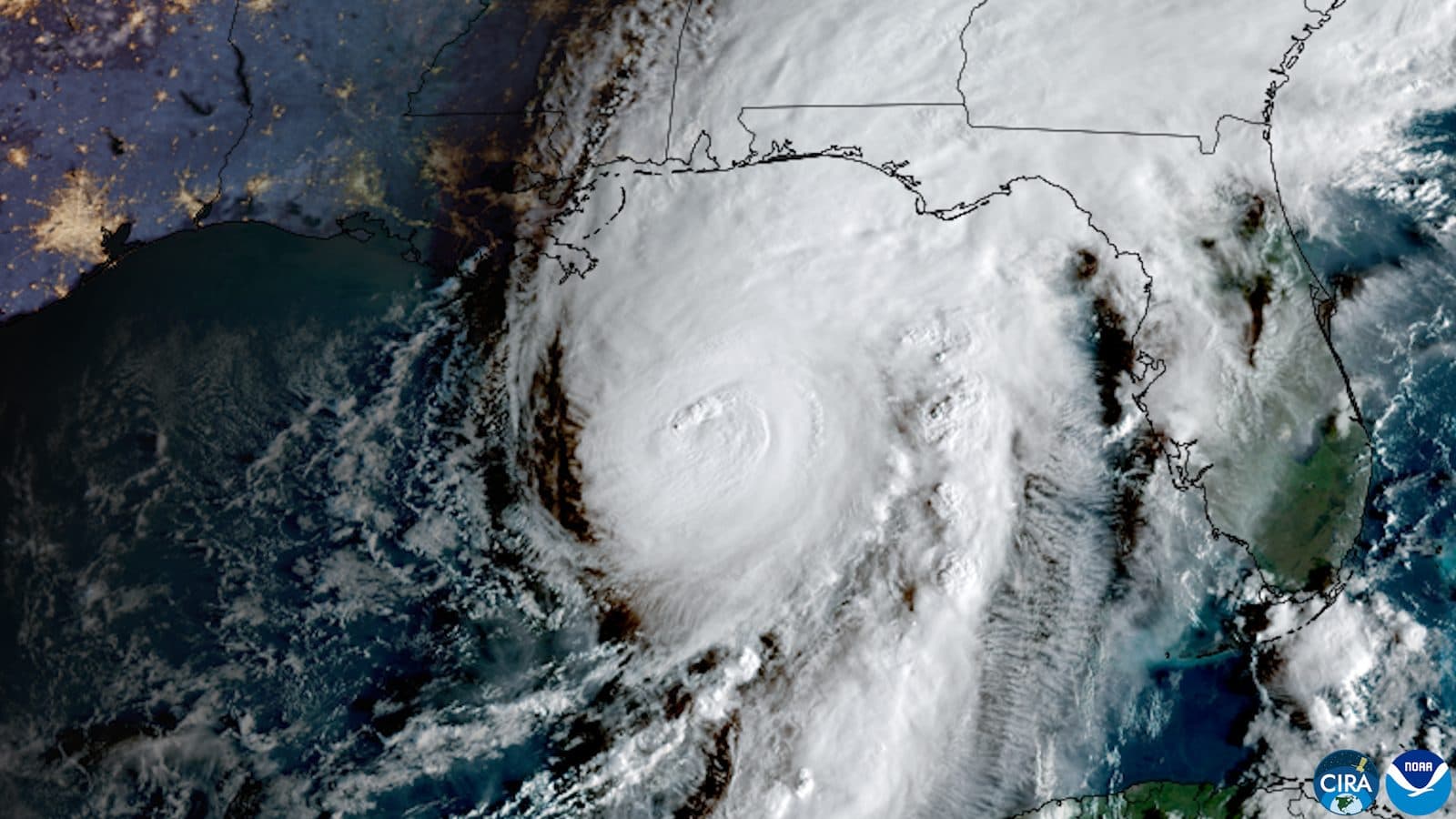
The wait went on for another month. Isaias reached hurricane strength on 7 October, nearly four weeks after that 2002 date. Two days later it came ashore near Destin, Florida.
By the numbers, the 2026 Atlantic season is one of the quiet ones. But a quiet count did not stop one storm from cutting power to hundreds of thousands of customers. And on the other side of the continent, the Eastern Pacific has run well above normal. All figures here are as of 17 October 2026 and provisional: the National Hurricane Center (NHC) revises its data after the season ends.
How quiet has the Atlantic been?
Nine named storms so far, from Arthur on 17–18 June to Isaias on 6–10 October, according to the NHC's 2026 Atlantic table (updated 17 October). That is three below the 1991–2020 normal.
Only one became a hurricane, five below normal, and that one, Isaias, was also the only major hurricane, one below normal. The other eight stayed tropical storms.
The forecasters saw this coming. The question is why.
Why did the hurricanes not form?
El Niño. NOAA's outlook update of 6 August 2026 gave a 75% chance of a below-normal season, 20% near-normal and 5% above-normal. It expected 7 to 13 named storms, 2 to 6 hurricanes and 0 to 2 major hurricanes, each range at 70% probability.
The same update said El Niño was expected to continue and strengthen, with a 90% chance of becoming a strong or very strong event.
The September report attributes the suppressed activity to strong wind shear over the Caribbean and the main development region, which it links to El Niño. For comparison, it gives an average season as 14 named storms, 7 hurricanes and 3 major hurricanes.
A suppressed season, though, still had one storm in it.
What did Isaias do on the Gulf Coast?
The NHC table lists Isaias as a major hurricane, with peak winds of 105 knots and a minimum pressure of 959 millibars.
Al Jazeera reports that it made landfall near Destin on 9 October as a hurricane with maximum sustained winds of 105 mph (169 km/h). It then weakened to a post-tropical storm over southern Alabama.
Early on 10 October, more than 664,000 customers in Florida and Alabama were without power, Al Jazeera said, citing poweroutage.com. Roads in Destin were flooded. The full extent of the damage was not yet known.
How far above normal is the Eastern Pacific?
Well above, on every measure. The NHC's Eastern Pacific table lists 19 named storms (five above normal), 9 hurricanes (two above) and 7 major hurricanes (four above).
The storm active on 17 October is Hurricane Trudy, listed as a major hurricane active from 13 to 17 October, with peak winds of 105 knots and a minimum pressure of 956 millibars.
In the NHC's update of 17 October, Trudy had sustained winds of 90 mph near 17.0N, 104.3W, moving northwest at about 10 mph. It was forecast to pass near the coast of west-central Mexico on the night of 17 October and on 18 October. The same page showed no tropical cyclones in the Atlantic or Central Pacific at the time.
What we do not know
- Deaths from Isaias. The Al Jazeera report mentions none. The NHC table shows zero direct deaths, which we read as an assessment not yet made, not as a finding.
- Damage. The NHC table gives no damage total, and on 10 October the full extent was not yet known.
- The final counts. The season is not over, and the NHC revises its tables afterwards.
- Trudy's impact on Mexico. On 17 October it had not yet passed the coast.
- Why the Eastern Pacific is so active. The sources we used give the numbers, not the cause.
What to watch
Trudy's track along the Mexican coast on 17 and 18 October, and the NHC's post-season review of Isaias. The lesson of 2026 so far is that a below-normal season can still deliver a hurricane to the coast. Anyone in a coastal area should follow the NHC and their national weather service for current advisories, not this summary.
Sources
- NHC: 2026 North Atlantic tropical cyclone table (updated 17 October 2026)
- NHC: 2026 Eastern Pacific tropical cyclone table (updated 17 October 2026)
- NOAA Climate Prediction Center: Atlantic hurricane season outlook, update of 6 August 2026
- NHC: current outlooks and advisories (17 October 2026)
- Al Jazeera: Isaias weakens after making landfall on the US Gulf Coast (10 October 2026)
- WLOX / WVUE: Without a summer hurricane, 2026 season is likely to make history (5 September 2026)
- FOX 10: Isaias forecast to become first hurricane of 2026 Atlantic season (7 October 2026)
Related articles

Comments (0)
Sign in to join the discussion.
- No comments yet — be the first.