Venezuela at the Crossroads: Power, Intervention, and the Limits of Law
The confrontation between the United States and Venezuela had been building for years. Caracas had been subjected to sanctions, diplomatic pressure, and accusations of corruption, authoritarianism, and links to transnational crime. The U.S. consistently refused to recognize Nicolás Maduro’s legitimacy, portraying Venezuela as a threat to regional stability. In response, the Venezuelan government framed its rhetoric around resisting “foreign interference” and relied on allies. Russia openly supported Venezuela politically, economically, and militarily, opposing sanctions and labeling pressure on Caracas as a violation of sovereignty. China, in turn, saw Venezuela as a strategic partner, investing in its energy sector and insisting on the principle of non-interference in domestic affairs. Internally, economic crisis, declining living standards, and mass emigration only heightened tension, turning Venezuela into a chronic flashpoint in global politics.
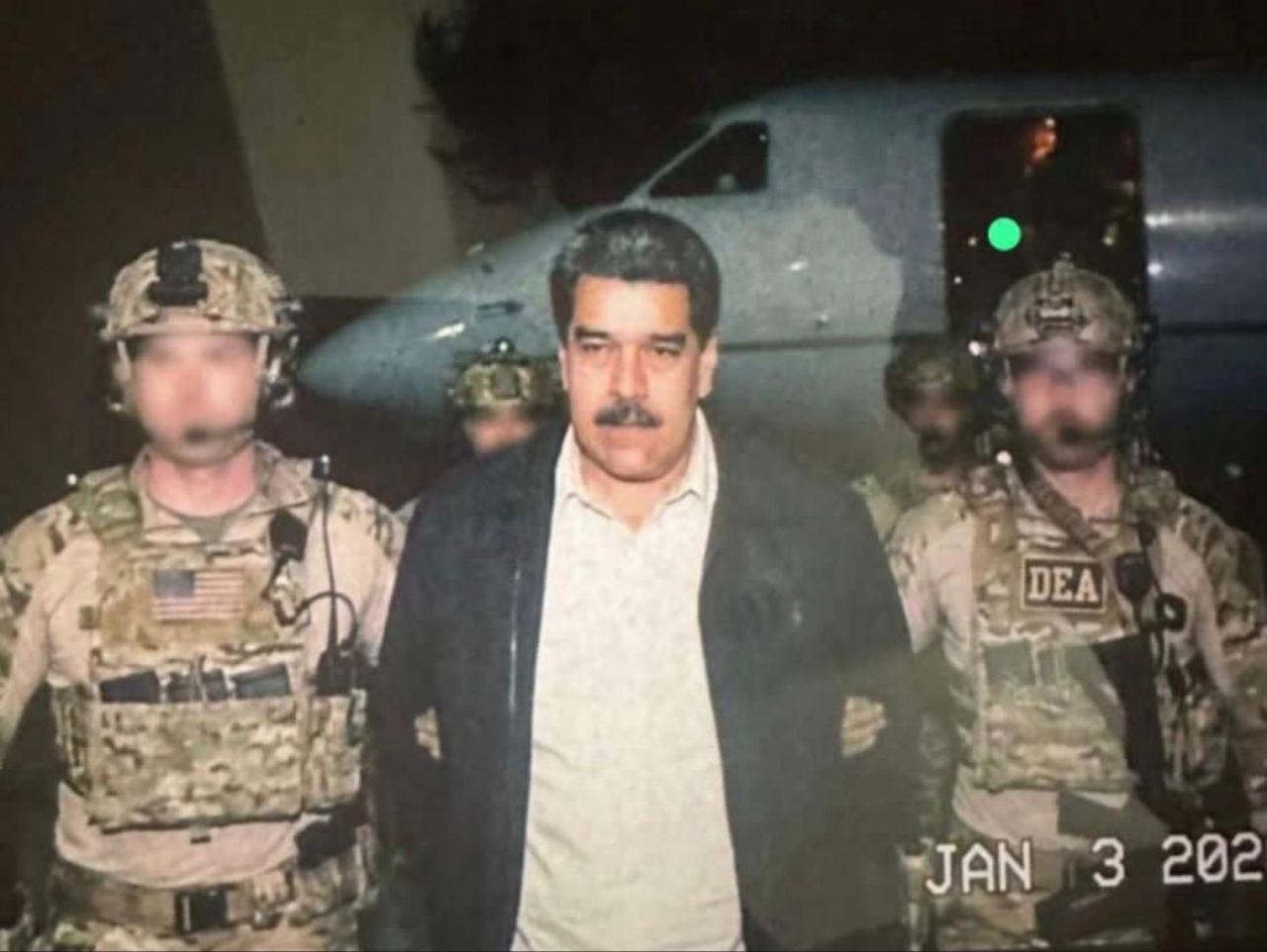
In early January 2026, tensions reached a breaking point. The U.S. launched a carefully planned military operation on Venezuelan territory. The initial hours included cyberattacks, disruption of communications, and precise strikes on facilities connected to government security and command structures. Simultaneously, special forces entered Caracas and captured Nicolás Maduro, immediately removing him from the country. The operation was designed for speed, to minimize resistance, and to limit the duration of combat in densely populated areas. Despite the precision of the strikes, reports of civilian casualties and injuries appeared almost immediately. For many Venezuelans, that night was a tragedy; for others, it was the end of years of crisis and authoritarian rule. The internal society became sharply divided, split between relief and outrage, between hope and fear for the future.
The international response was swift and harsh. An emergency session was convened at the United Nations to discuss the legality of U.S. actions and the permissibility of seizing a sitting head of state without Security Council approval. Russia and China strongly condemned the operation, calling it a violation of international law and a dangerous precedent. Yet a glaring question remains: Russia itself began aggression against Ukraine in 2014 and escalated it into a full-scale war in 2022, justifying its actions on grounds of security and historical claims. China, while condemning the U.S. intervention, has simultaneously tested the limits around Taiwan and openly considers it central to its strategic interests. If U.S. military intervention is a breach of international law, can a state that has used force against a neighbor convincingly claim moral authority? Or do the rules apply selectively, depending on whose interests are at stake?
This is where Venezuela’s story becomes a global warning. The forcible removal of a leader becomes a symbol of a shift in world politics, where law increasingly takes a back seat to power. Today it is Caracas; tomorrow it could be any capital inconvenient for the great powers. The world faces a question: is it acceptable to justify the use of force in the name of good intentions, and who will be next when arguments run out and only military might remains? If the largest powers consider intervention permissible whenever “justified,” what remains of international order, of sovereignty, and of law? And is the price for such decisions too high for ordinary people caught between power and justice?
Test