
PFM-1/1S
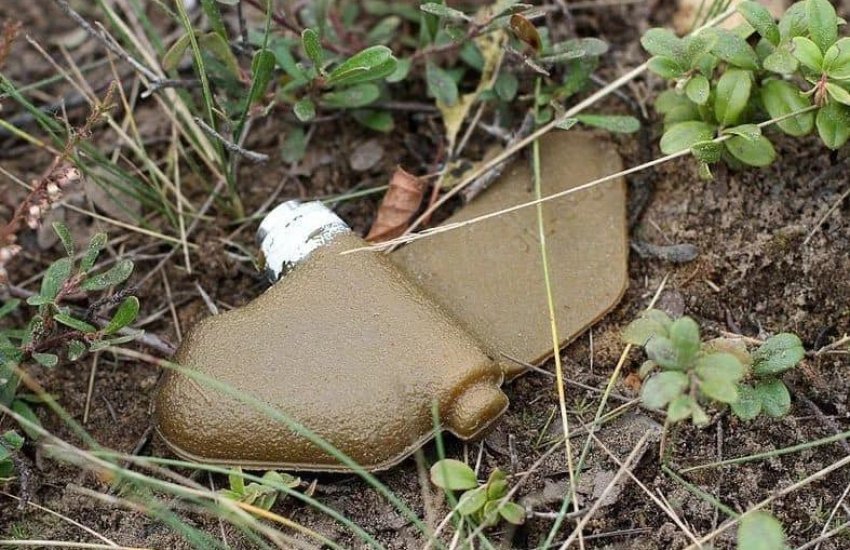
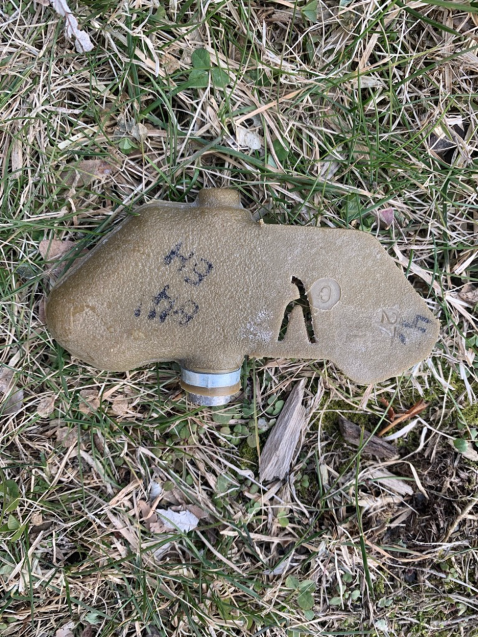
The PFM‑1 and PFM‑1S are scatterable anti-personnel blast mines developed by the former Soviet Union in 1974, designed for rapid and widespread area denial. They are small, lightweight, and almost entirely made of plastic, with a distinctive winged shape that allows them to glide unpredictably to the ground when dispersed from aircraft, helicopters, artillery rockets, or specialized mine-dispensing systems. This shape, combined with bright colors such as green, brown, sand, and occasionally yellow, makes the mines visually appealing and highly deceptive, often mistaken for toys, leaves, petals, or small seeds. The resemblance to everyday objects and natural debris means that civilians—particularly children—can easily handle or step on them without realizing the danger.
PFM‑1 mines contain approximately 37 grams of liquid explosive housed within flexible polymer membranes and are activated by minimal pressure, sometimes as little as five kilograms. This low activation threshold ensures that the mine is triggered by a person or small animal rather than a vehicle, producing traumatic injuries rather than immediate fatalities. Typical injuries include amputation of the foot or lower leg, severe shrapnel wounds, and long-term disability. This feature was deliberately designed to maximize the medical, logistical, and psychological burden on affected populations, as injured individuals require prolonged medical care and rehabilitation.
The PFM‑1S variant incorporates a self-destruct fuze intended to detonate within several hours, typically up to around forty hours. However, in practice these mechanisms often fail, leaving unexploded mines active for years. Both variants are virtually impossible to disarm safely; any attempt to move or tamper with the mine risks detonation. The only standard procedure for neutralization is controlled detonation in place by trained explosive ordnance disposal (EOD) personnel.
Visual detection of PFM‑1 mines is extremely difficult. Their small size, plastic construction, and minimal metal content make them nearly invisible to conventional metal detectors. They are easily obscured by grass, soil, leaves, snow, or debris, and their bright or earth-toned colors can blend into natural and urban environments. Even trained deminers rely heavily on careful visual scanning, ground-penetrating techniques, and specialized tools to locate these mines, emphasizing the risk they pose to civilians and humanitarian workers alike.
The humanitarian consequences of PFM‑1 use are severe and long-lasting. By design, these mines continue to maim and incapacitate people long after conflicts end, restricting access to farmland, roads, and residential areas. Their use creates a persistent, unpredictable threat that undermines recovery, agriculture, and civilian mobility. Communities affected by these mines face displacement, limited access to essential services, and ongoing trauma.
In Ukraine, PFM‑1 mines have been deployed extensively by Russian forces since the full-scale invasion in 2022. Human Rights Watch and other monitoring organizations have documented their use in both frontline and recaptured areas, including residential districts, agricultural fields, roads, and villages in regions such as Donetsk, Kharkiv, and Kherson. Civilians returning to previously occupied areas have been seriously injured by mines left behind, often in zones presumed to be safe. The deployment of PFM‑1 and other victim-activated mines in civilian environments exemplifies the indiscriminate nature of these weapons, contributing to both immediate casualties and long-term environmental contamination. Thousands of people have suffered injuries, many of them children, and large areas of farmland remain unsafe for cultivation.
PFM‑1 mines are banned under international law by the 1997 Mine Ban Treaty, also known as the Ottawa Convention, which prohibits the use, production, stockpiling, and transfer of anti-personnel mines. More than 160 countries, including Afghanistan, Angola, Bosnia and Herzegovina, Cambodia, Iraq, Lao PDR, Myanmar, Syria, and Vietnam, have ratified the treaty, committing to destroy existing stockpiles and clear mined areas. However, some major military powers, including Russia, the United States, China, India, and Pakistan, have not ratified the treaty and continue to retain or deploy these mines. In response to Russia’s use of antipersonnel mines on Ukrainian territory, Ukrainian authorities have emphasized the defensive challenges posed by indiscriminate mine deployment, highlighting the need for careful management of legacy stockpiles and the risks posed to civilians and humanitarian workers.
The PFM‑1’s design—lightweight, visually deceptive, and pressure-sensitive—combined with its use in populated areas, makes it one of the most dangerous and controversial mines in modern warfare. Its continued presence in Ukraine and other conflict zones underscores the devastating humanitarian legacy of scatterable mines: long-term injuries, widespread fear, restrictions on land use, and complex, resource-intensive demining operations that may take decades to complete. This combination of strategic utility in combat and indiscriminate, enduring civilian impact makes the PFM‑1 a symbol of both the challenges of modern conflict and the necessity of international humanitarian norms.
Hello! This is really interesting. This is a test comment for this post.
Hello! Thank you for your comment. This is a test reply to a comment and is used for demonstration purposes only.